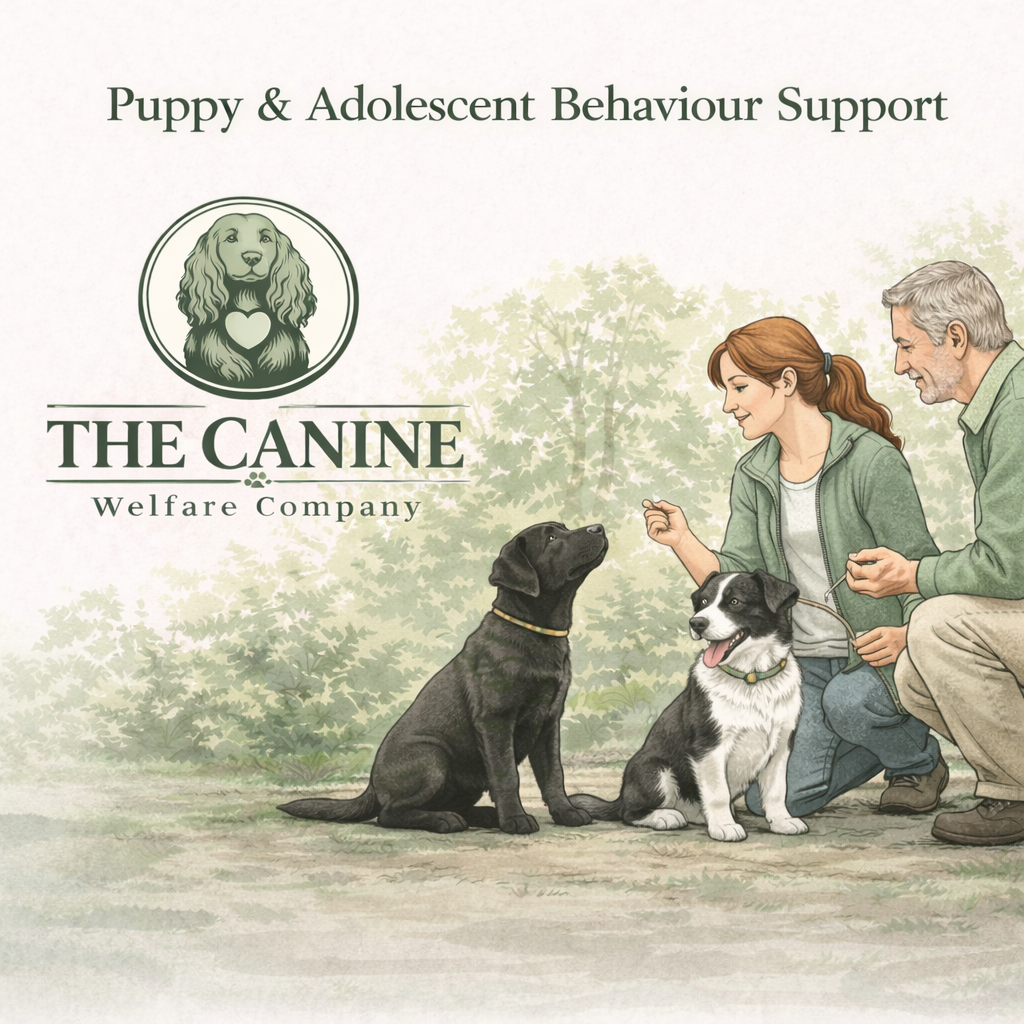
This package provides early behavioural assessment and intervention for puppies and adolescent dogs during key developmental periods. It is suitable for preventative referrals as well as cases where early signs of behavioural concern are emerging.
Support focuses on the development of appropriate coping strategies, emotional regulation, and resilience, with the aim of reducing the likelihood of escalation into more complex behavioural problems in adulthood. Common referral reasons include difficulties with socialisation, fear responses, frustration intolerance, impulse control, handling sensitivity, and the behavioural changes commonly observed during adolescence.
All recommendations are force-free, evidence-based, and welfare-centred. Aversive tools, punishment, and dominance-based techniques are not used. Where appropriate, collaboration with the referring veterinary surgeon is welcomed to ensure behavioural and physical health are considered holistically.
Pre-consult behavioural questionnaire and relevant history review
Comprehensive behavioural assessment appropriate to developmental stage
Identification of environmental, emotional, and learning factors influencing behaviour
Individualised behaviour support plan focusing on prevention and skill development
Guidance on appropriate social exposure, handling, and training foundations
Management strategies to support welfare and reduce risk during development
Owner education to support consistent, appropriate implementation
Written summary and recommendations suitable for sharing with the referring veterinary practice
Follow-up sessions are strongly recommended to monitor development, adjust strategies, and support ongoing behavioural progress as the dog matures.
This package provides early behavioural assessment and intervention for puppies and adolescent dogs during key developmental periods. It is suitable for preventative referrals as well as cases where early signs of behavioural concern are emerging.
Support focuses on the development of appropriate coping strategies, emotional regulation, and resilience, with the aim of reducing the likelihood of escalation into more complex behavioural problems in adulthood. Common referral reasons include difficulties with socialisation, fear responses, frustration intolerance, impulse control, handling sensitivity, and the behavioural changes commonly observed during adolescence.
All recommendations are force-free, evidence-based, and welfare-centred. Aversive tools, punishment, and dominance-based techniques are not used. Where appropriate, collaboration with the referring veterinary surgeon is welcomed to ensure behavioural and physical health are considered holistically.
Pre-consult behavioural questionnaire and relevant history review
Comprehensive behavioural assessment appropriate to developmental stage
Identification of environmental, emotional, and learning factors influencing behaviour
Individualised behaviour support plan focusing on prevention and skill development
Guidance on appropriate social exposure, handling, and training foundations
Management strategies to support welfare and reduce risk during development
Owner education to support consistent, appropriate implementation
Written summary and recommendations suitable for sharing with the referring veterinary practice
Follow-up sessions are strongly recommended to monitor development, adjust strategies, and support ongoing behavioural progress as the dog matures.