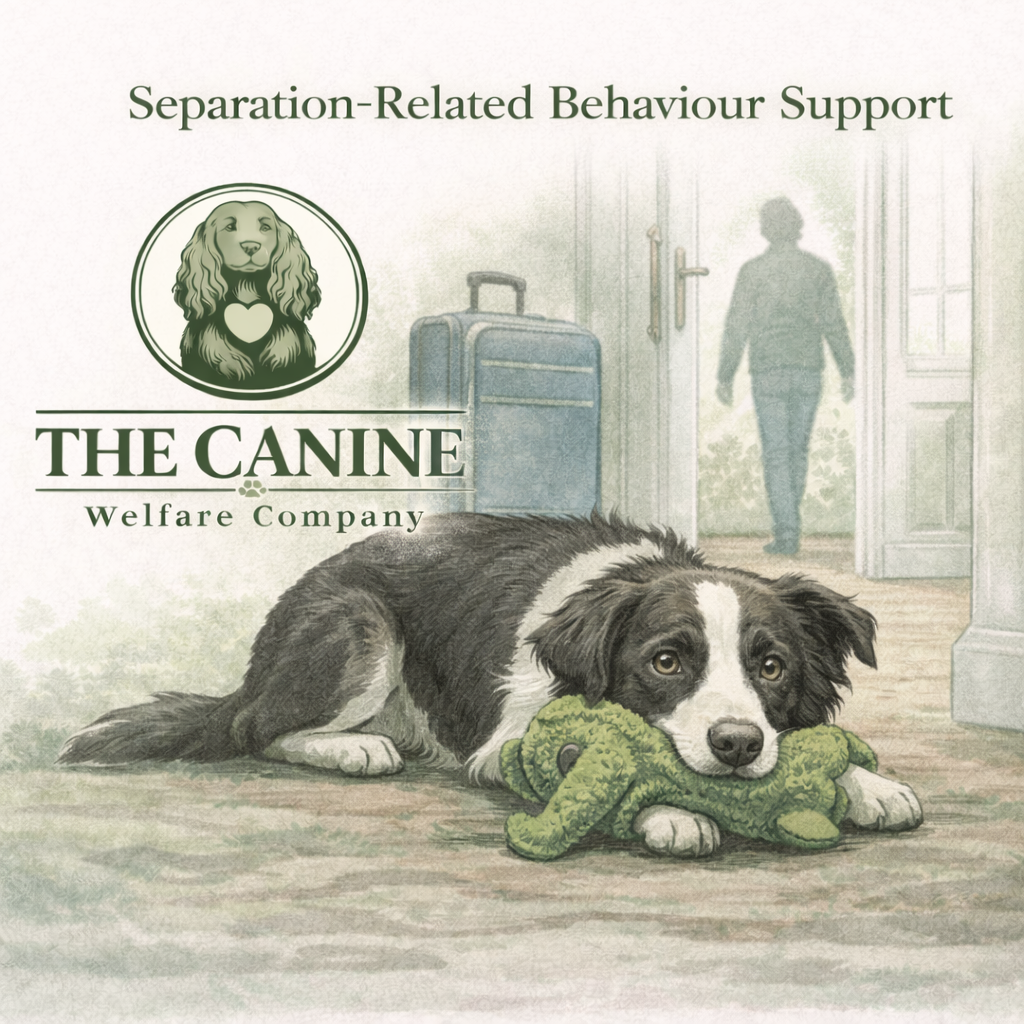
Some dogs find being left alone genuinely distressing. This service is designed for dogs who struggle with separation-related behaviours, including vocalisation, destruction, pacing, escape attempts, or signs of anxiety when their owner is absent.
Each case begins with a thorough assessment of your dog’s behaviour, routines, and environment. From there, a bespoke, graduated alone-time plan is created to help your dog learn to cope with short absences safely and comfortably, building tolerance at a pace that prioritises welfare and emotional wellbeing.
Support focuses on reducing distress rather than suppressing behaviour. This includes identifying departure cues, adjusting routines, and implementing environmental and emotional support strategies to help your dog feel more secure when left.
Where appropriate, collaboration with your veterinary surgeon is welcomed to ensure any underlying medical factors are considered and to discuss whether medication may support the behaviour modification process.
This service uses force-free, evidence-based methods only. Flooding, “cry-it-out”, or forced isolation techniques are never used. Follow-up sessions are strongly recommended to support progress, refine the plan, and achieve the best possible outcome for both dog and owner.
Some dogs find being left alone genuinely distressing. This service is designed for dogs who struggle with separation-related behaviours, including vocalisation, destruction, pacing, escape attempts, or signs of anxiety when their owner is absent.
Each case begins with a thorough assessment of your dog’s behaviour, routines, and environment. From there, a bespoke, graduated alone-time plan is created to help your dog learn to cope with short absences safely and comfortably, building tolerance at a pace that prioritises welfare and emotional wellbeing.
Support focuses on reducing distress rather than suppressing behaviour. This includes identifying departure cues, adjusting routines, and implementing environmental and emotional support strategies to help your dog feel more secure when left.
Where appropriate, collaboration with your veterinary surgeon is welcomed to ensure any underlying medical factors are considered and to discuss whether medication may support the behaviour modification process.
This service uses force-free, evidence-based methods only. Flooding, “cry-it-out”, or forced isolation techniques are never used. Follow-up sessions are strongly recommended to support progress, refine the plan, and achieve the best possible outcome for both dog and owner.